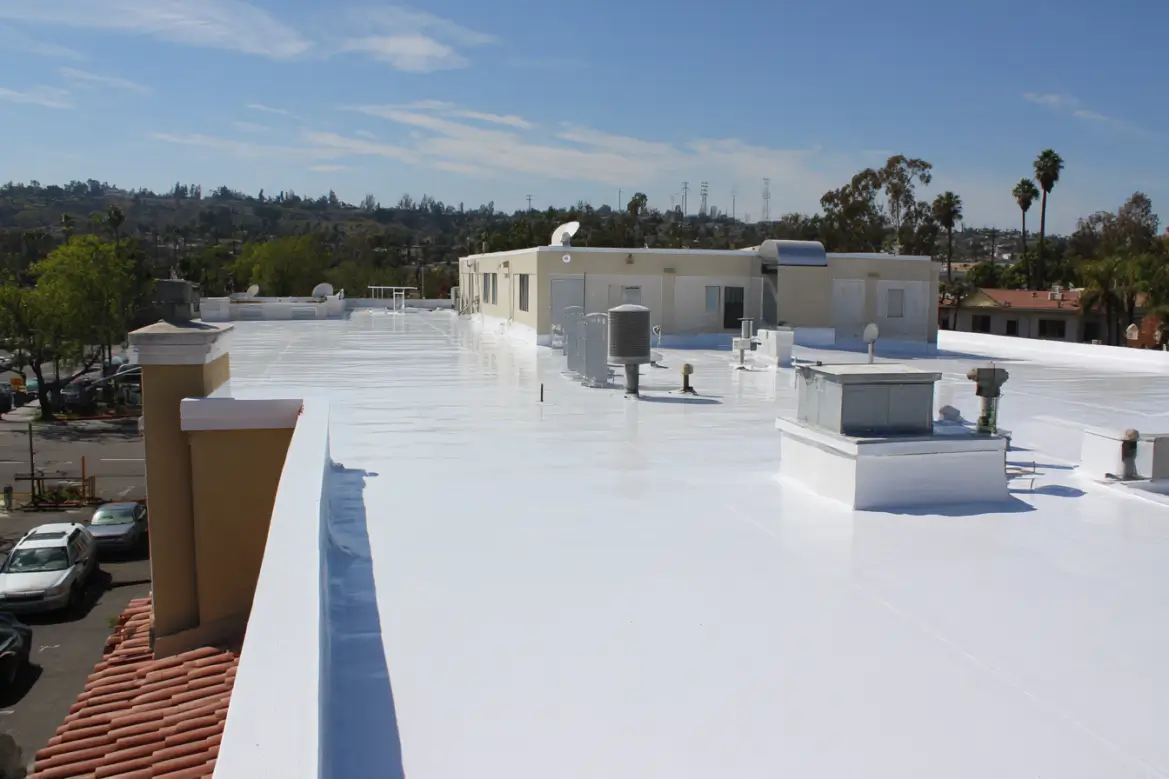
San Diego is famous for its mild temperatures and sunny skies, but the same conditions that make the city so livable can be surprisingly harsh on commercial roofing systems. Between year-round UV exposure, salt-air corrosion, coastal winds, and occasional heavy rain, buildings in San Diego face a unique combination of environmental stressors. Understanding how these factors affect a commercial roof is the first step in preventing premature deterioration, costly repairs, and disruptions to business operations.
Below is a streamlined, narrative-style look at the most common commercial roofing issues in San Diego and what building owners can do to prevent them.
1. UV Damage and Thermal Aging
San Diego experiences more than 260 sunny days a year, and this constant UV exposure slowly breaks down roofing materials. On flat or low-slope roofs—especially older built-up or modified bitumen systems—the sun can cause the surface to dry out and crack, a process often referred to as “alligatoring.” This brittleness reduces the membrane’s flexibility, making it more vulnerable to water intrusion and splitting.
In addition to UV damage, the constant heating and cooling cycle throughout the day creates expansion and contraction in the roof membrane. Over time, this thermal movement weakens seams and joints, and in some cases causes the roof to shrink away from parapet walls or penetrations.
Preventing UV damage largely comes down to proactive care: periodic inspections, timely repairs, and the use of reflective coatings that protect the membrane from direct sunlight. Modern materials such as TPO, PVC, or elastomeric coatings offer excellent UV resistance and are good candidates for San Diego’s climate.
2. Salt-Air and Coastal Corrosion
While the ocean is a defining feature of life in San Diego, the salt carried in the marine air can accelerate the corrosion of metal components on a commercial roof. Flashing, fasteners, HVAC units, and parapet caps are especially vulnerable. Even buildings several miles inland can accumulate salt over time, and once corrosion begins, it often spreads beneath protective coatings where it isn’t visible.
Salt-related deterioration often starts slowly, showing early signs like discolored metal or minor rusting at seams and edges. If ignored, the metal eventually weakens, creating pathways for rainwater to enter the building. Preventing this type of damage requires regular cleaning, proper protective coatings, and the use of corrosion-resistant metals such as stainless steel or coated fasteners. Buildings closer to the shoreline may need more frequent inspections than those farther inland.
3. Moisture Intrusion and Water Ponding
Although San Diego receives less rainfall than many cities, its commercial roofs still experience seasonal downpours—especially during El Niño years. Flat roofs are designed to hold a minimal amount of water temporarily, but significant ponding is a common problem when drains clog or when the roof develops low spots over time.
Ponding water does more than create an eyesore. It places additional weight on the roof structure, accelerates membrane deterioration, and often leads to mold growth or insulation saturation. Even small areas of standing water can create long-term problems if left unaddressed.
Proper drainage is the key to preventing moisture issues. This includes routine cleaning of drains and scuppers, removal of debris after storms, and ensuring that HVAC condensation isn’t pooling on the roof surface. In some cases, adding tapered insulation to improve the slope is necessary to prevent recurring ponding.
4. Flashing Failures and Penetration Leaks
Most leaks in commercial roofing systems do not originate from the center of the roof but from areas around penetrations—places where vents, pipes, skylights, HVAC units, and other equipment pass through the roof surface. Flashing is installed to seal these areas, but in San Diego’s climate, flashing can deteriorate due to UV exposure, temperature fluctuations, or movement from rooftop equipment.
Aged or cracked sealant, loose metal, or failing membrane boots are common problems. When flashing begins to fail, water tends to travel beneath the roof system, often appearing inside the building far from the actual entry point. This makes early detection critical.
Preventing flashing failures requires attention to detail and consistency. Regular inspections around equipment, timely resealing, and the use of high-quality, climate-appropriate materials go a long way. After installing new rooftop equipment, the flashing should always be re-evaluated, as this is one of the most common times for leaks to develop.
5. Wind Uplift and Storm-Related Damage
San Diego may not experience hurricanes, but its seasonal winds—especially Santa Ana events—are strong enough to cause issues with commercial roofing systems. These winds can lift loose membrane edges, expose insulation, or dislodge metal flashing. Once wind enters beneath the membrane, even a small vulnerability can turn into a significant failure.
Storm-related damage often occurs around the perimeter of the roof, which is typically the first area to loosen when uplift pressures increase. After strong winds, it’s wise to schedule a quick inspection to ensure edges, seams, and rooftop equipment remain secure. Reinforcing the perimeter and keeping the roofing system up to current uplift standards can significantly reduce the risk of damage.
6. Lack of Routine Maintenance
One of the most overlooked contributors to roof failure is simply a lack of regular maintenance. Many commercial building owners assume that a new or recently repaired roof requires minimal attention. In reality, every roofing system—regardless of age—benefits from routine inspection and care.
Debris accumulation, small cracks, and minor drainage issues can escalate quickly if ignored. What would have been an easy fix can become a major repair or even lead to premature replacement. A typical commercial roof in San Diego should be inspected at least twice a year—before and after the rainy season—and after any severe weather.
Regular documentation also preserves warranty coverage, as most manufacturers require proof of ongoing maintenance.
7. Improper Installation or Poor-Quality Repairs
Even the best roofing material will fail if installed incorrectly. Unfortunately, rushed installations, unskilled labor, and cut corners are common causes of premature roof problems. Issues such as improper fastening, incompatible materials, incorrect slopes, or poorly executed seams can all create weak points in the system.
Choosing reputable, licensed roofing professionals familiar with San Diego’s climate and California’s Title 24 energy requirements is essential. Quality installation is the single strongest predictor of long-term roof performance.
8. Damage from Solar Panels and Rooftop Equipment
Solar energy is extremely popular in San Diego, and commercial buildings often host large photovoltaic systems. While beneficial, these installations introduce additional roof penetrations, increased foot traffic during installation, and new areas where debris can accumulate.
Improper mounting or poorly flashed penetrations can lead to leaks. Likewise, heavy equipment or technician activity can damage membranes if proper walkway pads aren’t in place. If a solar or mechanical contractor installs new equipment without coordinating with a roofing professional, issues can arise quickly.
A collaborative approach is the best defense: whenever new equipment is added to the roof, the roofing system should be inspected and modified as needed to maintain watertight integrity.
Conclusion: Prevention Is the Key to Roof Longevity
San Diego’s weather may feel easygoing, but it places unique demands on commercial roofing systems. UV exposure, salt air, wind, and seasonal rain each create conditions that can shorten a roof’s lifespan if not addressed proactively. Fortunately, most problems are preventable with consistent inspections, early repairs, and the use of high-quality materials designed for coastal climates.
A commercial roof is one of a building’s most important long-term investments. With a well-planned maintenance strategy and attention to the local environment, San Diego building owners can significantly extend the life of their roofing systems while reducing long-term costs.